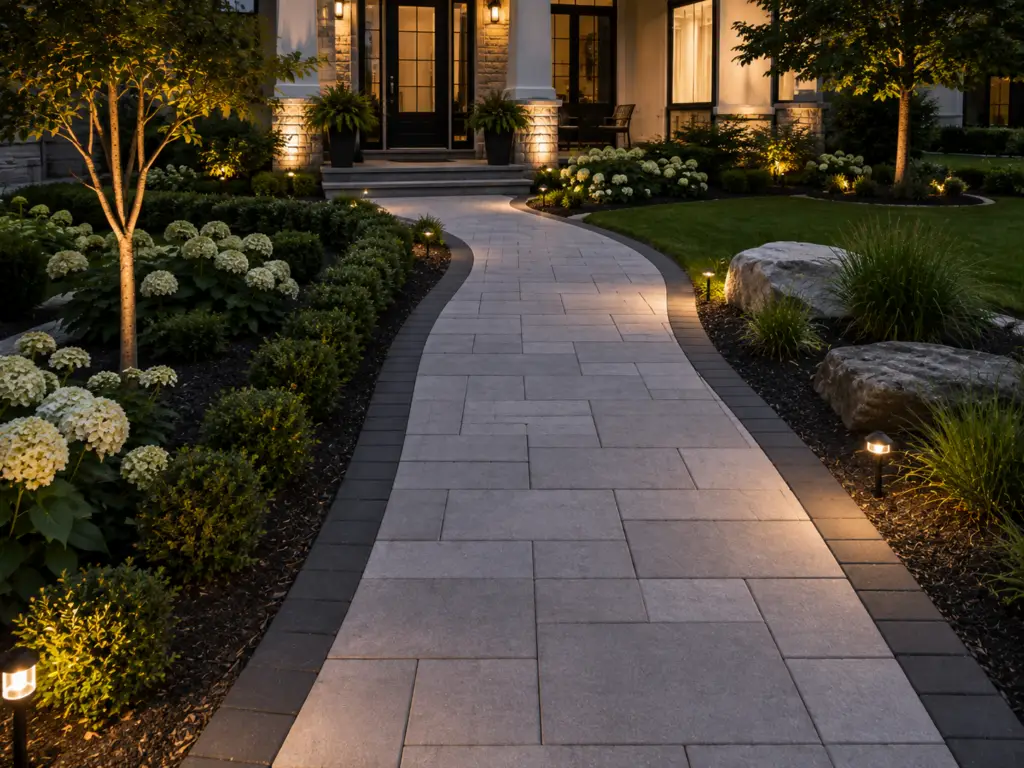
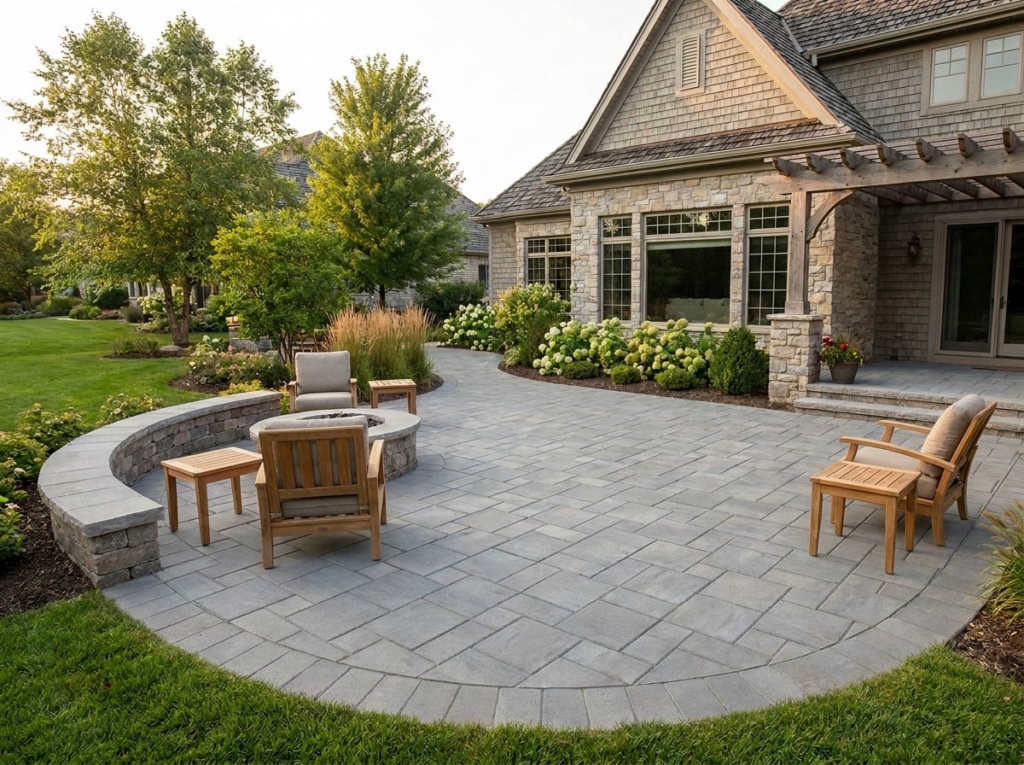
Hardscaping is the structure your landscape is built around. Patios, walkways, walls, and driveways determine how you move through your property, where you gather, and how the whole space holds together. BlackRock Outdoor Living designs and builds hardscape installation projects across Barrington and the surrounding communities, handling everything from base excavation and grading through final paver placement and joint stabilization. The result is outdoor living space that looks intentional and stands up to Illinois freeze-thaw cycles year after year.
A well-planned hardscape installation solves problems while it improves the view. A patio gives you a level place to put furniture. A walkway keeps traffic off the turf. A retaining wall turns a slope you cannot use into flat, usable yard. We start with how you actually live outdoors, then design the stonework around it.
Most hardscape failures trace back to what is underneath. Settling, shifting pavers, and cracked joints come from inadequate excavation, poor compaction, or drainage that was never planned for. We build to depth with properly compacted aggregate, install edge restraints that hold the field tight, and grade every surface so water moves away from your foundation instead of pooling on it. The finished surface is what you see, but the base is what determines whether it is still level in fifteen years.
Our crews follow the base and bedding standards published by the Interlocking Concrete Pavement Institute, the industry body that sets best practices for segmental paving in North America. Meeting those specifications is the difference between a surface that ages well and one that needs to be rebuilt in a few seasons.
Crushed aggregate is placed in lifts and compacted, with driveways built deeper than patios to carry vehicle loads.
Perimeter restraints lock the field tight so the pavers cannot creep or spread over the years.
Every surface is pitched to move water away from your foundation instead of letting it pool against the house.
We build to the base and bedding standards published by the Interlocking Concrete Pavement Institute.
Before anything is dug, we walk the property with you, take measurements, and map the finished elevations. From there every paver patio installation, paver walkway, and driveway we build follows the same ten-step sequence, and we do not shorten it on smaller jobs. The first five steps all happen below grade, where nobody will ever see them.
We strip sod and soil to the depth the application calls for and haul the spoils off site. Patios and walkways are typically dug six to eight inches below finished grade, and driveways go deeper to carry vehicle loads.
The floor of the excavation is graded to mirror the finished surface, holding a consistent pitch so water sheds away from your foundation instead of collecting under the pavers.
The exposed subgrade is compacted until it stops moving. Uncompacted subsoil is the single most common reason pavers dip and settle a few years after installation.
A woven geotextile barrier is installed over the compacted subsoil to separate it from the stone above. It stops northern Illinois clay from pumping up into the base and keeps the aggregate from sinking into soft ground.
Six inches of open-graded 3/4-inch clean angular stone is placed and compacted in lifts. Clean means no fines, so water drains straight through the base instead of freezing inside it.
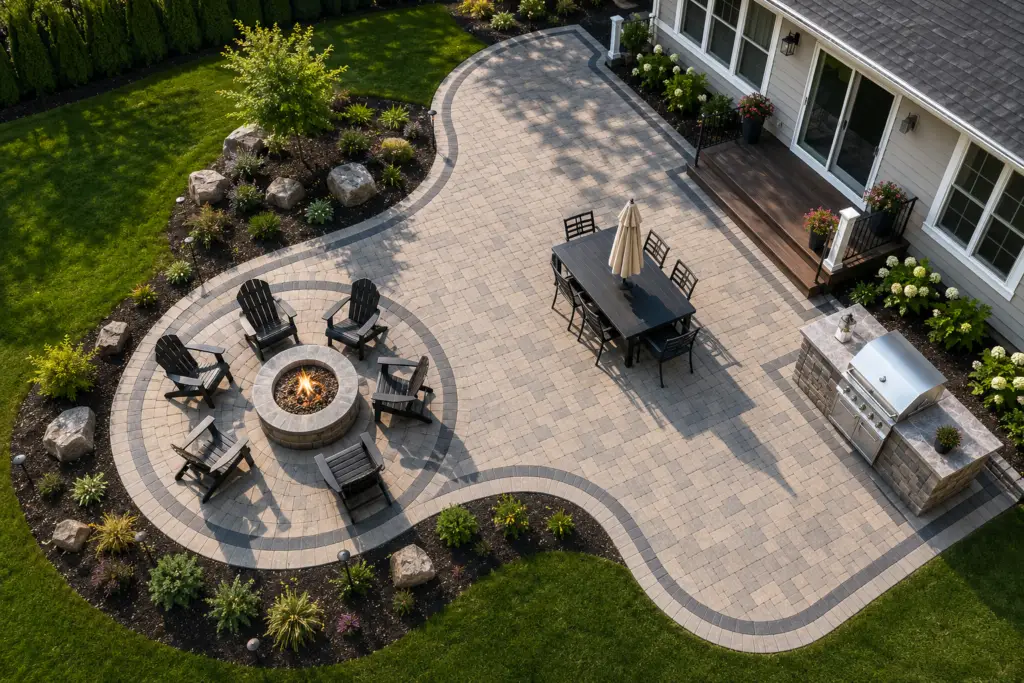
With the base compacted and drained, the visible half of the hardscape installation begins. These five steps are what lock the surface together and keep it looking new, and skipping any one of them is what leads to spreading edges, weedy joints, and faded pavers.
A screeded one-inch bedding course of 3/8-inch limestone chip gives the pavers a firm, free-draining setting bed that will not rut or wash out the way bedding sand does.
Pavers are laid to the pattern and border detail chosen during design, with every field cut made on site so the perimeter lines stay clean and tight.
A concrete Perma Edge restraint is installed around the entire perimeter, locking the pavers in place so the outside courses cannot creep, spread, or drop over time.
Polymeric sand is swept into the joints, the surface is compacted, and the sand is watered in on the manufacturer's schedule so it cures into a flexible joint that resists weeds, ants, and washout.
Once the joints have cured, we seal the surface to lock in color, stabilize the joints, and make the pavers far easier to clean season after season.
Most crews stay on site continuously from excavation through cleanup rather than starting your project and disappearing to another job, so you always know who is on your property and what is happening each day. You can follow that same sequence from dig to finished surface in our completed project gallery.
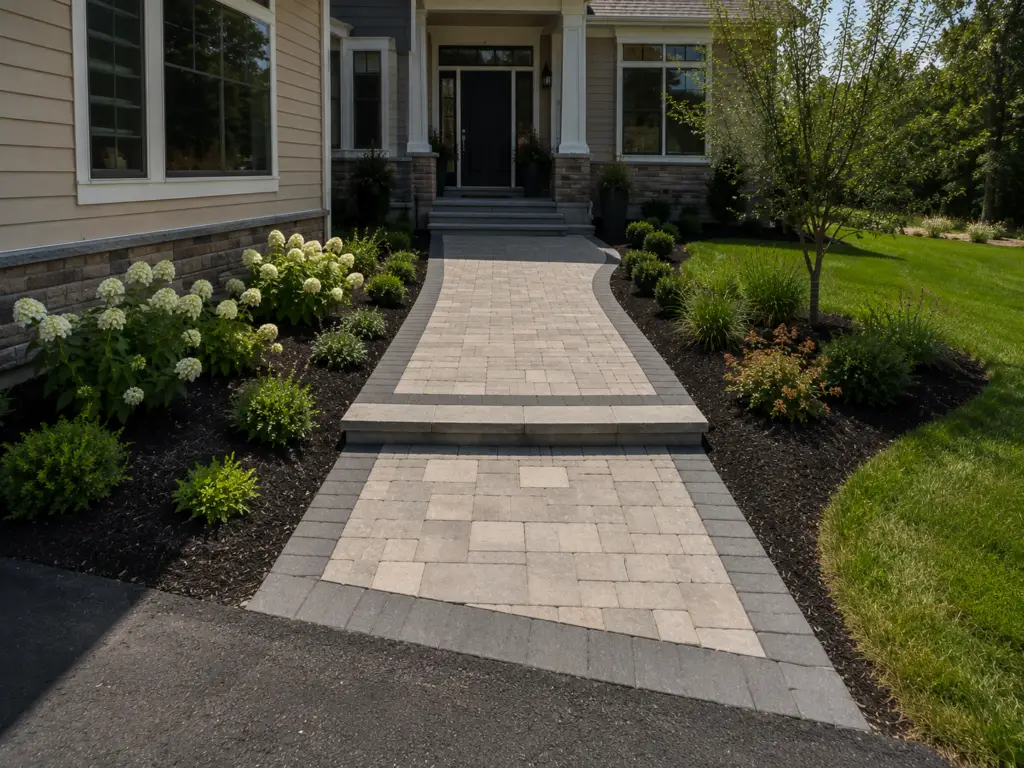
Every hardscape installation starts with how you actually use your property. These are the four builds we are asked for most often, and they are frequently combined into one cohesive plan.
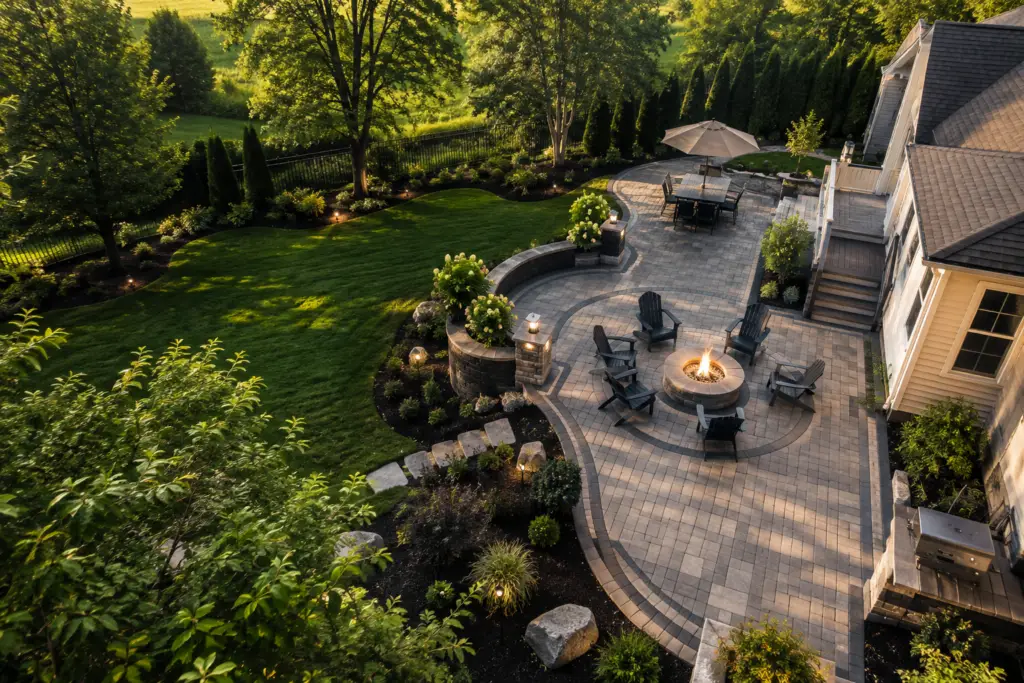
Sized around real furniture and real gatherings, with contrasting borders, seat walls, fire features, and steps that connect cleanly to the house.
Built wide enough for two people side by side, with consistent riser heights and a border detail that frames the path.
Engineered for the load the slope actually puts on them, with drainage stone, pipe, and geogrid reinforcement where height requires it.
Deeper excavation, a thicker compacted base, and pavers rated for vehicular traffic that can be lifted and reset if a repair is ever needed.
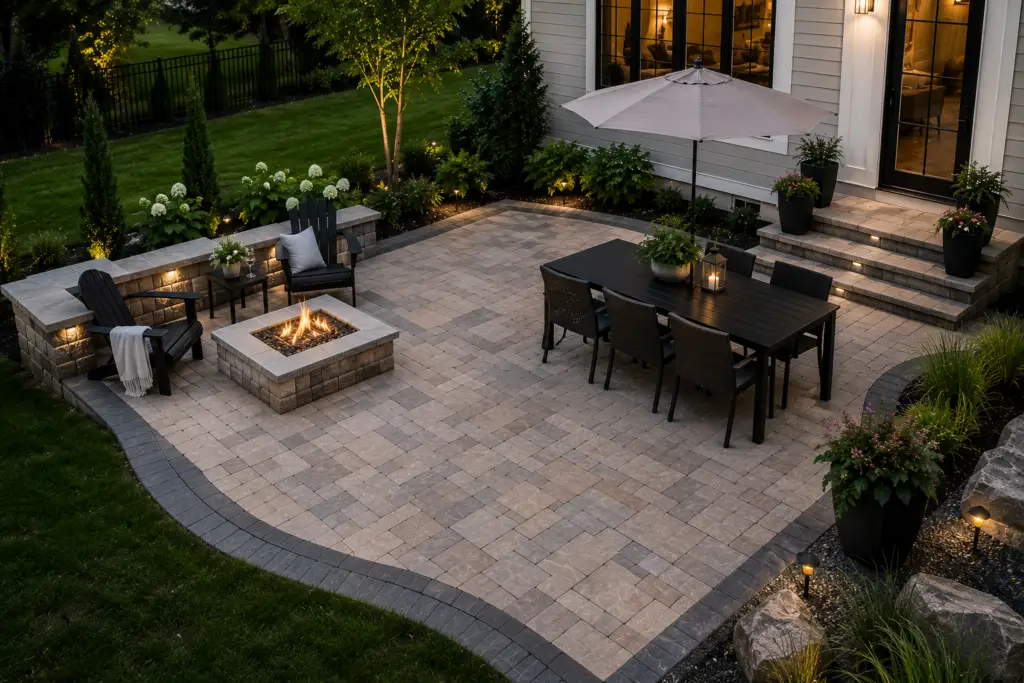
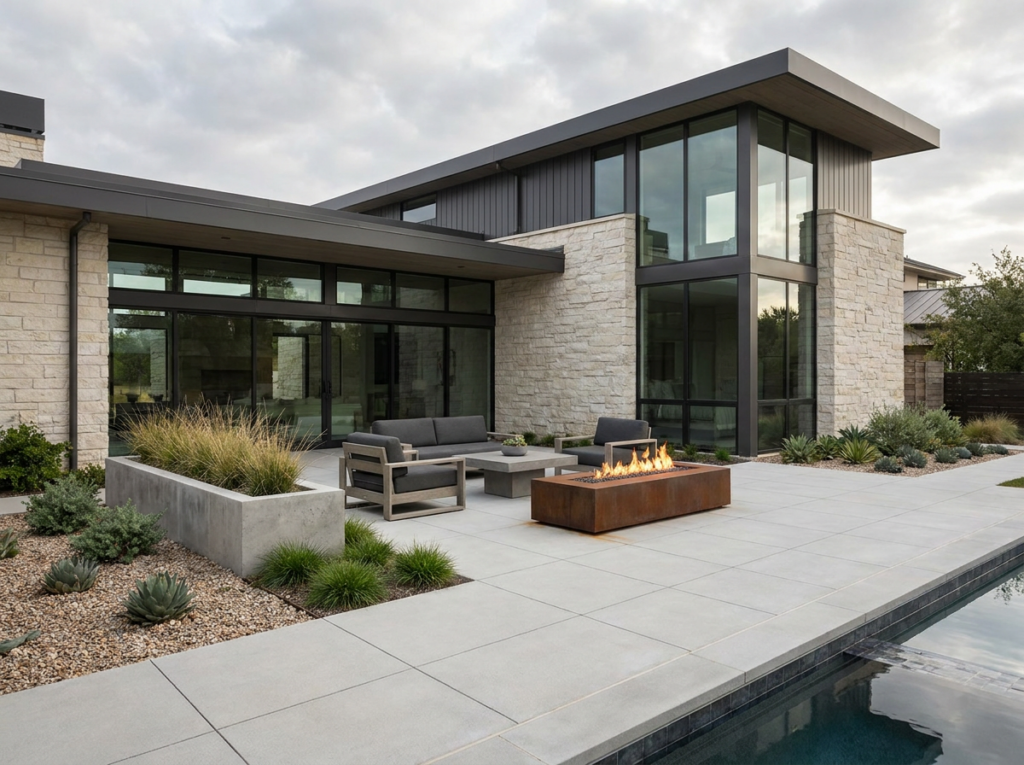
Northern Illinois puts every hardscape installation through dozens of freeze-thaw swings between November and April. Water works into any gap it can find, expands, and pries the surface apart. We specify concrete pavers, natural stone, and clay brick rated for this climate, and we build joints and drainage that give water somewhere to go.
Material selection also comes down to your home. A formal brick paving entry calls for something different than a rustic bluestone terrace, and we help you match the hardscape to the architecture rather than fighting it. You can compare finished surfaces across our completed projects before you choose.
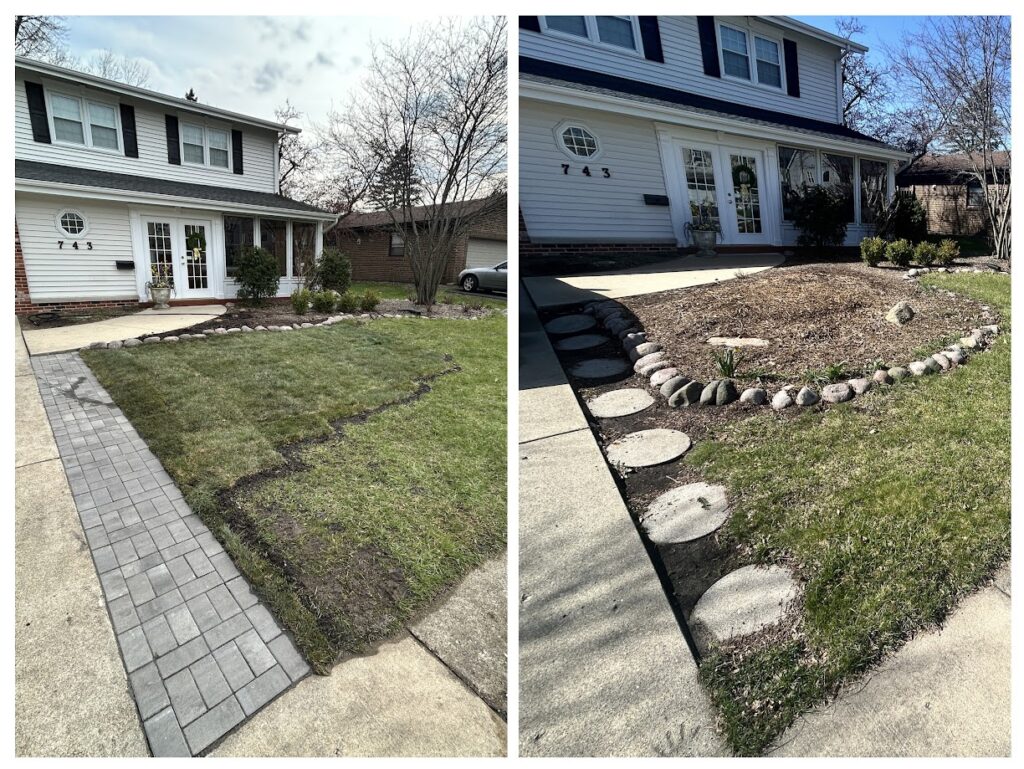
Water is the reason hardscaping fails, and it is the part of a project homeowners rarely think about until something goes wrong. Every surface we build is pitched to move water away from your foundation at a slope you will never notice underfoot.
Where the grade works against us, we add drainage stone, perforated pipe, catch basins, or a dry well so runoff has a planned destination instead of finding its own. If your property already has a wet corner or a downspout dumping against the house, we would rather solve that during the hardscape installation than build over it.
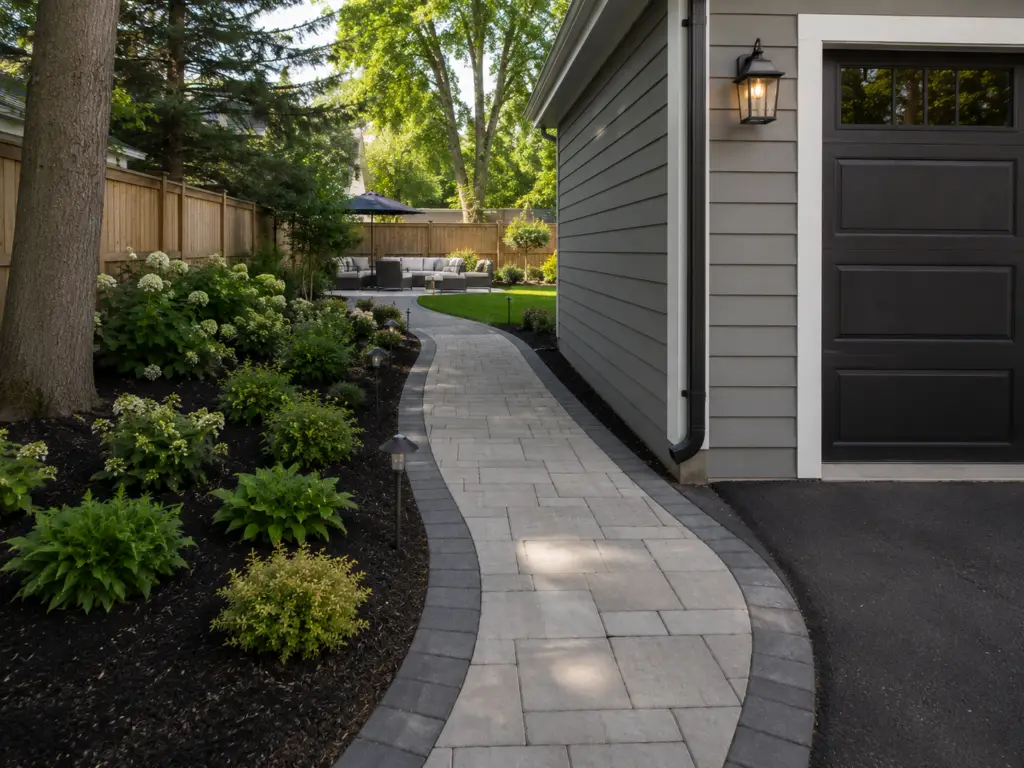
Segmental paving is low maintenance, not no maintenance. Joint sand settles over time, sealers wear, and organic debris left in joints invites weeds and moss. A light annual cleaning, joint sand refreshed every few years, and resealing on a reasonable cycle will keep a surface looking close to new for decades.
We handle that ongoing work as well, so the crew that knows how your hardscape installation was built is the same crew maintaining it. You can see the full range on our services page, along with related detail work on our brick paving page.
A hardscape installation is a significant investment, and most of what separates a good installation from a bad one is buried where you cannot inspect it. What you can evaluate is how a contractor communicates, whether the crew shows up, and what previous clients say once the job is finished and paid for.
We give you a written scope before work begins, so you know the materials, the depths, and the timeline. We stage the site to keep disruption contained and we clean up daily. And we build the base to specification even on the days nobody is watching, because that is the only part of a hardscape installation that cannot be corrected later. Our customer reviews and completed projects are the fastest way to judge whether that holds up.
We provide hardscape installation throughout Barrington, Inverness, Lake Zurich, South Barrington, Palatine, Deer Park, and the neighboring towns listed on our service areas page.
If your property sits just outside that list, get in touch and we will let you know whether we can reach you this season. You can also request a free property estimate and we will walk the site with you.
Most residential projects run one to two weeks depending on square footage, site access, and the amount of grade work required. Larger multi-element projects that combine a patio, walls, and walkways can run longer.
Hardscape installation cost depends on square footage, material selection, site conditions, and how much excavation and grading the site needs. We provide a written estimate after walking the property, so you know the scope before any work begins.
Spring through fall is the ideal window for hardscape installation, though we build into the late season as conditions allow. Booking early in the season secures better scheduling.
Concrete pavers, natural stone, and clay brick, selected to match your home architecture and your maintenance preferences.
Requirements vary by municipality, and driveways and walls are more likely to require review than patios. We tell you what your village expects during the estimate rather than after the crew arrives.
Yes. Grading and water management are planned into every project rather than added afterward.
Often, yes. We can extend an existing patio, rebuild a failing section, or match new work to what is already installed, though matching older paver colors exactly is not always possible.
For patios and walkways we build six inches of compacted 3/4-inch clean stone over a compacted subgrade, plus a one-inch bedding course of 3/8-inch limestone chip. Driveways are excavated deeper and built with additional base to carry vehicle loads. Depth also depends on soil conditions, since heavy clay needs more base than well-draining sandy soil.
Clean stone is open graded, meaning it has no fines packed into it, so water drains straight through the base instead of sitting in it and freezing. In a northern Illinois freeze-thaw climate that drainage is what keeps the base from heaving. We compact it in lifts and separate it from the subsoil with a geotextile barrier so the two never mix.
Polymeric sand is jointing sand blended with a binder that hardens when it is activated with water. Sweeping it into the joints and watering it in on the manufacturer’s schedule cures it into a firm but flexible joint that resists weed growth, ant tunneling, and washout from rain or a pressure washer.
Yes. Once the polymeric sand has cured we seal the surface, which locks in the color of the pavers, stabilizes the joints, and makes the surface much easier to clean. Sealer wears over time, so we recommend resealing on a regular cycle as part of ongoing maintenance.
Questions? Call us!